
For readers evaluating music ai for marketing and advertising, the fit question is where it helps, which inputs control the result, and what needs human review before the workflow repeats. The strongest music ai for marketing and advertising workflow turns an audio idea into something the reader can edit, review for rights, and match to the intended channel. For rapgenerator.org, start with AI Rap Generator; bring in Pricing only when it clarifies the next decision.
Keep the first pass on rapgenerator.org small enough to inspect: a hook idea, a short verse or chorus direction, and whether the result can be edited and used in the intended channel. AI Rap Generator - Create Rap Music with AI anchors the page in the actual site experience, and the U.S. Copyright Office AI hub plus the TikTok Commercial Music Library guide add outside guidance on cleaner workflows. That matters for readers deciding whether music ai for marketing and advertising fits a specific use case, workflow, or constraint.
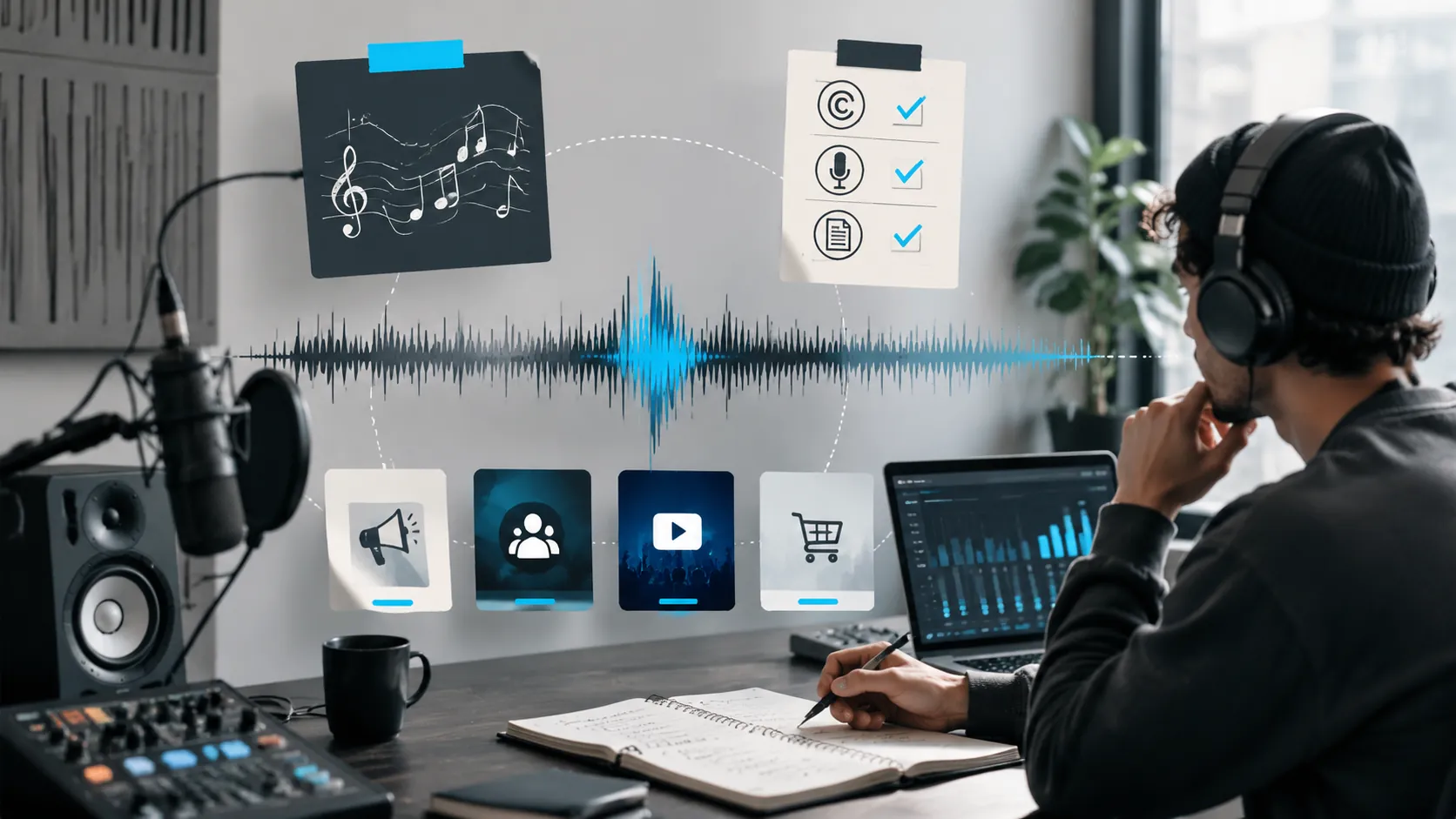
The structure follows Choose the First Audio Channel for Music AI for Marketing and Advertising, Audio Examples for Short Posts, Ads, and Reuse, and Resize the Hook Without Rewriting the Song Idea, moving from context to a usable test instead of another loose overview.
Key Takeaways
- Frame music ai for marketing and advertising around the reader's next move instead of a broad feature tour.
- Make AI Rap Generator the first validation step, then branch only when the evidence is still incomplete.
- Match each prompt to the channel constraint before rewriting the whole idea.
- Use Audio Examples for Short Posts, Ads, and Reuse to make the next choice more concrete.
Choose the First Audio Channel for Music AI for Marketing and Advertising
Music AI for Marketing and Advertising changes when the channel changes. A short social post, ad hook, visual brief, and long-form update can share one idea, but they cannot share the same constraint. Start with the channel before polishing the prompt. Anchor this to channel intent and hook length. Keep the checkpoints visible: channel intent, hook length, audience expectation, and rapgenerator.org context. Do not expand the section until a hook idea, a short verse or chorus direction, and whether the result can be edited and used in the intended channel are clear enough to review.
- Match the prompt to 1 channel job: attention, explanation, conversion, or reuse.
- Change the format constraint before changing the whole idea.
- Decision point: use Choose the First Audio Channel for Music AI for Marketing and Advertising to remove one uncertainty, not to add another general option.
Channel Decision Table
| Area | Decision | Review Signal |
|---|---|---|
| Channel Intent | Choose whether the post needs attention, explanation, conversion, or reuse | Look for less cleanup, clearer fit, or a safer stop rule |
| Hook Length | Decide how this changes the first music ai for marketing and advertising test | Look for less cleanup, clearer fit, or a safer stop rule |
| Audience Expectation | Match the prompt to what the reader is ready to understand in that channel | Look for less cleanup, clearer fit, or a safer stop rule |
| Rapgenerator.org Context | Decide how this changes the first music ai for marketing and advertising test | Look for less cleanup, clearer fit, or a safer stop rule |
That baseline matters before the reader opens AI Rap Generator or uses the U.S. Copyright Office AI hub as a reference point, because both are easier to judge when the first job is already named.
Audio Examples for Short Posts, Ads, and Reuse
Examples are useful only when they show the constraint, not just the finished wording. For music ai for marketing and advertising, the same product idea should look different as a short caption, an ad hook, and a structured visual prompt. That contrast helps the reader see what the prompt must control before they generate more variants. Anchor this to short-video hook and ad mood. Keep the checkpoints visible: short-video hook, ad mood, creator post, and rapgenerator.org context. The reader should be able to judge Audio Examples for Short Posts, Ads, and Reuse with a hook idea, a short verse or chorus direction, and whether the result can be edited and used in the intended channel.
- Use 3 examples: a short post, an ad hook, and a structured visual prompt.
- Define audience, topic, tone, and output length before asking for copy.
- Local fit: keep this section grounded in rapgenerator.org and the reader's next audio workflow decision.
The music ai for marketing and advertising article works best when Audio Examples for Short Posts, Ads, and Reuse narrows the choice instead of widening it with another abstract recommendation.
Resize the Hook Without Rewriting the Song Idea
Adapting one prompt across platforms works best when the core idea stays stable and only the channel constraint changes. Start with one base prompt, then adjust length, format, opening angle, and review rule for each platform instead of rewriting from scratch. Anchor this to TikTok or Reels and Instagram. Make TikTok or Reels, Instagram, YouTube Shorts, and rapgenerator.org context explicit so the paragraph cannot drift into a reusable framework. Make the test specific to music ai for marketing and advertising: a hook idea, a short verse or chorus direction, and whether the result can be edited and used in the intended channel.
- Write one base prompt for the core idea.
- Local fit: keep this section grounded in rapgenerator.org and the reader's next audio workflow decision.
- Compare the outputs for clarity, reuse, and brand fit.
- Keep the version that is easiest to repeat next week.
Step Summary
- Define the audio workflow job and success criteria.
- Run one narrow audio workflow version before adding variants.
- Review audio workflow against the strongest constraint.
- Save the audio workflow version that is easiest to reuse.
The useful next step is to run one small audio workflow test, keep the result, and ask whether it clarifies the original decision.
Music and Rights Mistakes Before Publishing
The most common mistakes are not dramatic. They are vague audiences, missing format constraints, and review rules that arrive after the output is already generated. Fixing those basics usually improves Music AI for Marketing and Advertising more than adding another feature. Anchor this to rights check and mood mismatch. Keep the checkpoints visible: rights check, mood mismatch, tempo fit, and rapgenerator.org context. The reader should be able to judge Music and Rights Mistakes Before Publishing with a hook idea, a short verse or chorus direction, and whether the result can be edited and used in the intended channel.
- Vague audience instructions make the output sound generic.
- Missing format constraints make the same idea fail across channels.
- Review rule: the reader should be able to test Music and Rights Mistakes Before Publishing with one concrete Music AI for Marketing and Advertising pass.
The music ai for marketing and advertising article works best when Music and Rights Mistakes Before Publishing narrows the choice instead of widening it with another abstract recommendation.
A Practical Audio Reuse Workflow for Content Teams
A repeatable music ai for marketing and advertising workflow needs fewer moving parts than most people expect. Prepare one Music AI for Marketing and Advertising input, run one version, review it against a short rule, and save the version that worked. Only after that baseline is visible does rapgenerator.org become a useful comparison instead of another distraction. Anchor this to idea backlog and audio variants. Anchor this section in idea backlog, audio variants, rights review, and rapgenerator.org context, then leave out anything that does not change the decision. Make the test specific to music ai for marketing and advertising: a hook idea, a short verse or chorus direction, and whether the result can be edited and used in the intended channel.
- Prepare the smallest useful input.
- Run one version and save the output.
- Review rule: the reader should be able to test A Practical Audio Reuse Workflow for Content Teams with one concrete Music AI for Marketing and Advertising pass.
- Improve one variable before scaling.
Once the reader has a working first pass, point them to the most relevant internal tool or guide. Start with AI Rap Generator, then use Pricing only when it adds useful context to the decision already on the table.
FAQ
When Does Music AI for Marketing and Advertising Make Sense for Rapgenerator Readers?
Use Music AI for Marketing and Advertising when the reader has one clear output, channel, or workflow constraint to test. If the goal is still vague, set a success rule before trusting the first result.
What Problem Does Rapgenerator Need Music AI for Marketing and Advertising to Solve?
The problem music ai for marketing and advertising solves is the gap between a broad idea and a result the reader can judge. It helps readers create a testable first pass, then compare that pass against AI Rap Generator, Pricing, or another relevant page before investing more time.
What Does a Practical Rapgenerator Workflow for Music AI for Marketing and Advertising Look Like?
Begin by writing the output target, run a small pass through AI Rap Generator, then compare with Pricing or Blog after the baseline is visible.
What Limitations Should Rapgenerator Readers Check with Music AI for Marketing and Advertising?
The main limitations for Music AI for Marketing and Advertising are vague inputs, weak review criteria, and assuming one good-looking result proves the whole workflow. With music ai for marketing and advertising, change one variable at a time and stop when cleanup becomes the real work.
How Do You Know If Music AI for Marketing and Advertising Is the Right Fit for Rapgenerator?
The fit is strong when the Music AI for Marketing and Advertising output survives a calm review and the next step is obvious. If the reader has to rescue the result manually, tighten the job first.
Music AI for Marketing and Advertising Decision Rule for Rapgenerator
The strongest music ai for marketing and advertising workflow turns an audio idea into something the reader can edit, review for rights, and match to the intended channel.
For music ai for marketing and advertising, continue when the use case produces a result the reader can reuse, explain, or improve. Start with AI Rap Generator, then use Pricing only when it improves the decision. For rapgenerator.org, that means the reader should leave with a concrete next click, not just a warmer opinion of the topic.
For rapgenerator.org, the best close is one the reader can use immediately: test, compare, revise, or pause.