
A beginner guide to rap music ai for beginners should give the reader one safe first move, one review rule, and one reason to continue or pause. The strongest rap music ai for beginners workflow turns an audio idea into something the reader can edit, review for rights, and match to the intended channel. For rapgenerator.org, start with AI Rap Generator; bring in Pricing only when it clarifies the next decision.
Before expanding the workflow, make one test observable through a hook idea, a short verse or chorus direction, and whether the result can be edited and used in the intended channel. AI Rap Generator - Create Rap Music with AI gives the product context, while the U.S. Copyright Office AI hub and the TikTok Commercial Music Library guide help frame constraints, examples, and review habits. That matters for beginners and curious readers trying to understand rap music ai without jargon overload. This is not another broad pass over adjacent published topics; the article differentiates itself through a narrower audience and stricter decision criteria.
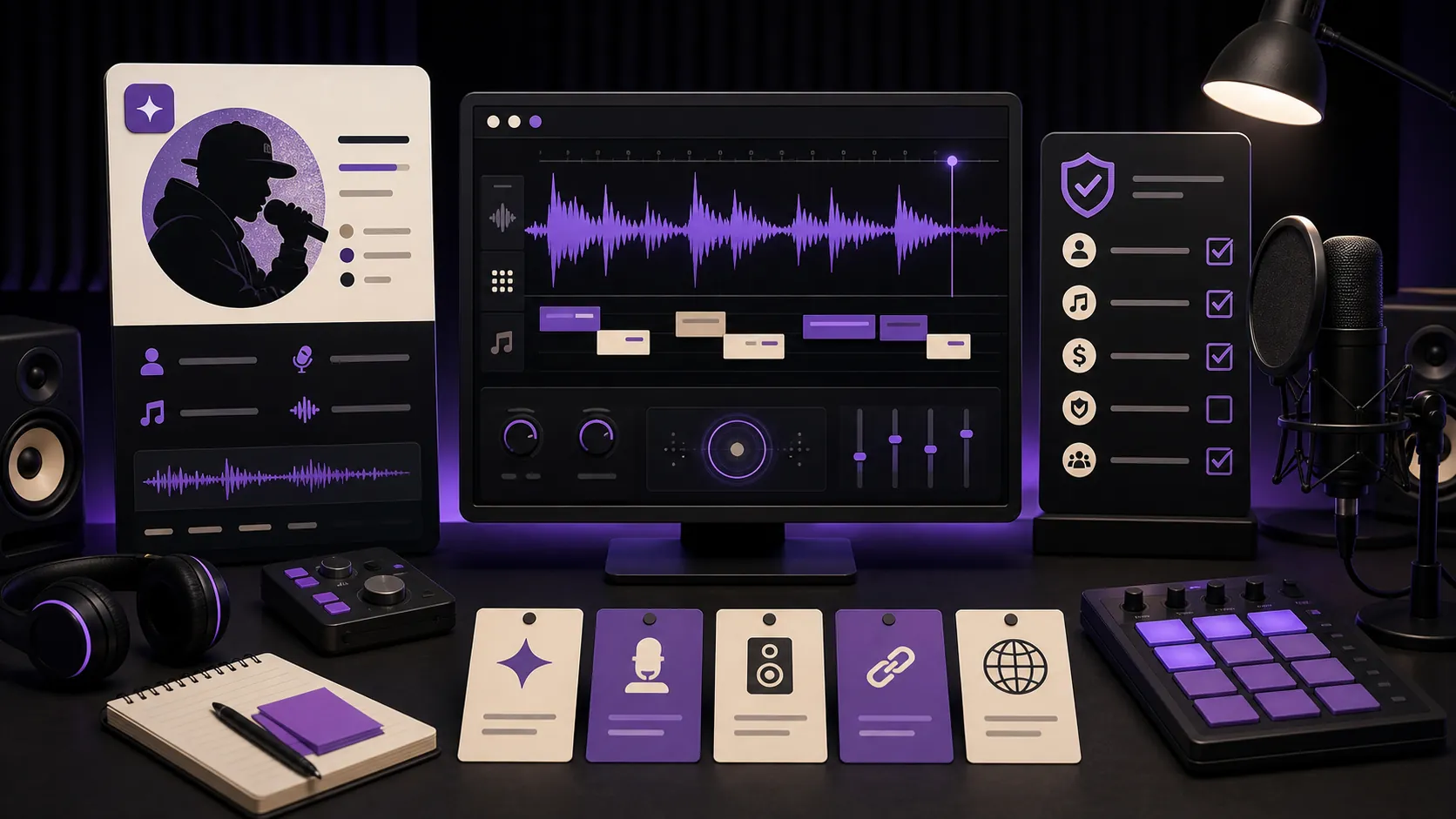
For rapgenerator.org, the order is practical: understand the decision, run one bounded test, and leave with a clear follow-up path.
Key Takeaways
- Keep rap music ai for beginners tied to a visible first result so the reader can judge fit quickly.
- Make AI Rap Generator the first validation step, then branch only when the evidence is still incomplete.
- Start with one audio idea, one channel goal, and a short rights/editing check before adding variants.
- Keep A Repeatable Workflow You Can Reuse small: prepare, run, review, save, then improve one variable.
The Fastest Useful Start for Rap Music AI
The fastest useful start for rap music ai for beginners is one concrete example, one target outcome, and one success rule. Run the smallest complete Rap Music AI pass first, then check whether the result is usable before scaling it into a larger workflow. Anchor this to first input and success criteria. Make first input, success criteria, and time box explicit so the paragraph cannot drift into a reusable framework. Make the test specific to rap music ai for beginners: a hook idea, a short verse or chorus direction, and whether the result can be edited and used in the intended channel.
- Name the exact Rap Music AI job before comparing options in The Fastest Useful Start for Rap Music AI.
- rapgenerator.org check: tie The Fastest Useful Start for Rap Music AI back to first input and success criteria before recommending another path.
- Keep only the step that makes the next attempt easier to judge.
Step Summary
- Define the audio workflow job and success criteria.
- Run one narrow audio workflow version before adding variants.
- Review audio workflow against the strongest constraint.
- Save the audio workflow version that is easiest to reuse.
That baseline matters before the reader opens AI Rap Generator or uses the U.S. Copyright Office AI hub as a reference point, because both are easier to judge when the first job is already named.
A Repeatable Workflow You Can Reuse
A repeatable rap music ai for beginners workflow needs fewer moving parts than most people expect. Prepare one Rap Music AI input, run one version, review it against a short rule, and save the version that worked. Only after that baseline is visible does Blog become a useful comparison instead of another distraction. Anchor this to prepare and run. Keep the checkpoints visible: prepare, run, review, and save. A concrete audio workflow test stays specific: a hook idea, a short verse or chorus direction, and whether the result can be edited and used in the intended channel.
- Prepare the smallest useful input.
- rapgenerator.org check: tie A Repeatable Workflow You Can Reuse back to prepare and run before recommending another path.
- Review against a short checklist.
- Improve one variable before scaling.
The rap music ai for beginners article works best when A Repeatable Workflow You Can Reuse narrows the choice instead of widening it with another abstract recommendation.
How to Review the First Output
The first finished output should be reviewed before the reader builds a routine around it. Check whether the input, constraint, result, and reuse plan for Rap Music AI still point in the same direction. If rap music ai for beginners runs but the result needs heavy manual repair, it is technically complete but not practically useful yet. Anchor this to accuracy and tone. Tie the advice back to accuracy, tone, fit, and reuse; those details are what make this section belong to the topic. Do not expand the section until a hook idea, a short verse or chorus direction, and whether the result can be edited and used in the intended channel are clear enough to review.
- Start with the constraint How to Review the First Output is meant to clarify.
- Review one Rap Music AI output before opening another path.
- Review rule: the reader should be able to test How to Review the First Output with one concrete Rap Music AI pass.
The useful next step is to run one small audio workflow test, keep the result, and ask whether it clarifies the original decision.
When to Iterate and When to Stop
Iteration helps only when it teaches something specific about Rap Music AI. Change one variable, run one review pass, and keep the version that is easiest to reuse. If every retry creates a different problem, stop and narrow the rap music ai for beginners setup before exporting again. Anchor this to one variable and good enough. Keep the checkpoints visible: one variable, good enough, and stop rule. The reader should be able to judge When to Iterate and When to Stop with a hook idea, a short verse or chorus direction, and whether the result can be edited and used in the intended channel.
- Local fit: keep this section grounded in rapgenerator.org and the reader's next audio workflow decision.
- Run one small rap music ai for beginners test to expose the real constraint.
- Keep only the step that makes the next attempt easier to judge.
After this check, rap music ai for beginners should have a clear verdict: continue with the path that worked, pause because the signal is weak, or rewrite the brief before spending more time.
Stress-Test Rap Music AI Before You Commit
Before committing more time to rap music ai for beginners, ask whether the first result is useful or merely interesting. The local question for rapgenerator.org is whether the result supports the next action the reader would actually take. If the first result looks interesting but does not help beginners and curious readers trying to understand rap music ai without jargon overload, it is still too early to build a larger routine around it.
The review should answer three things: what worked, what needs one cleaner retry, and whether the result helps the reader choose one relevant next click. Those questions keep the decision grounded in evidence the reader can see. They also keep the workflow practical: a hook idea, a short verse or chorus direction, and whether the result can be edited and used in the intended channel.
- Keep the first test small enough to finish in one sitting.
- Change one variable at a time so the result teaches something specific.
- Save the first usable version before exploring variants.
- Stop when the next retry would only make the workflow busier, not clearer.
The point is not to make Rap Music AI sound bigger; it is to make the next decision easier to defend. They can move forward when the workflow produces one clear, reusable outcome, and they can pause when the process depends on guesses the first session has not proved.
FAQ
What Is Rap Music AI?
Rap Music AI refers to a practical way to use rap music ai for beginners for a defined job, then judge whether the result is clear enough to repeat. Start with AI Rap Generator, keep the first test narrow, and treat Pricing as a comparison point only after the basic fit is visible.
When Should Beginners Use Rap Music AI?
Choose Rap Music AI when a short test can show whether the workflow fits. Pause when the goal is broad enough that every result would seem acceptable.
How Do You Get Started with Rap Music AI?
Begin by writing the output target, run a small pass through AI Rap Generator, then compare with Pricing or Blog after the baseline is visible.
What Mistakes Do Beginners Make with Rap Music AI?
Rap Music AI breaks down when the reader cannot tell whether the output is useful, reusable, or merely novel. A narrower brief usually fixes more than another blind retry.
What Should You Learn First About Rap Music AI?
Rap Music AI is a good fit when the first pass teaches the reader what to keep, change, or stop. If it only creates more cleanup, the workflow is not ready yet.
Final Verdict on Rap Music AI
The strongest rap music ai for beginners workflow turns an audio idea into something the reader can edit, review for rights, and match to the intended channel.
For rap music ai for beginners, the right next step is a small first attempt with a clear stop rule. Start with AI Rap Generator, then use Pricing only when it improves the decision. The strongest ending for rap music ai for beginners is a usable verdict: try this path, narrow the brief, or stop before more complexity is added.
End with one action the reader can take now, plus one honest stop rule for when rap music ai for beginners is not ready to scale.